Script
Just cause is a free roaming game series where you can blow up anything you feel like between or during missions.
The main part of the game is to liberate the locals by overthrowing the dictator of the area. You do this by destroying infrastructure.
You are equipped with a selection of weaponry, explosives as well as a grapple and parachutes.
There is also a wide variety of vehicles to choose, from cars to trucks to tanks to boats to helicopters to jets.
The map has over 1000km of space to explore.
By creating chaos you unlock more weapons, vehicles and missions.
As you cause chaos you gain heat, which is how hard the local military is after you.
Just cause sold over 1 million copies by April 2009, it was released in 2006. Just cause 2 sold over 7 million copies by September 2013, it was released in 2010, out performing the first just cause by a factor of 7.
The just cause game locations are based off of real world locations (the Caribbean, southeast asia and the Mediterranean).
The just cause series is named after the real life US invasion of Panama, called Operation: Just cause
Just Cause got mixed reviews with people feeling it was rushed and repetitive. Just Cause 2 was one of the most popular games at the time with high ratings across the board. There is an island in the game that is a reference to lost that sinks boats and knocks aircraft out of the sky.
Just Cause is a 3rd person, action-adventure video game series that is created by Avalanche Studios. The series currently consists of two games, Just Cause and Just Cause 2, with a third installment, Just Cause 3, set to be released in December of 2015. The games are all open world and take place in tropical environments.
The Just Cause series takes its name from the actual real-life United States invasion of Panama, which was code-named "Operation Just Cause".
Each game in the Just Cause series features a story of multiple factions fighting over control of a small nation. But although all three games take place in real world locations (the Caribbean, Southeast Asia, and the Mediterranean) the islands are purely fictional and the games only draw inspiration from those locations. The player can take part in a variety of optional side missions, for example liberating a village or taking over a drug cartel's villa. In Just Cause these missions are generally quite repetitive, but are needed to gain points with certain factions. In Just Cause 2 the side missions became unique and more complex. When not taking on a story mission, players can free-roam and create chaos (Why? just cause.). But, doing so can attract unwanted and potentially deadly attention from the local authorities in the form of "heat".
The core game-play consists of elements of a third-person shooter and a driving game, with a massive open-world map to explore. On foot, the player's character is capable of walking, swimming and jumping, as well as using weapons. Players can take control of a wide range of vehicles, including cars, boats, airplanes, helicopters, motorcycles and even an underwater scooter. Players can also perform stunts with their cars in which they can stand on the roof and jump to another car, or choose to open their parachute whilst still in motion on the roof. Other key features of include parasailing (grappling onto a car/ boat/ plane/ pedestrian while utilizing a parachute) and skydiving.
The open, free roam environment allows players to explore and choose how they wish to play the game. Like many 'sandbox' type games, while the story-line missions are a necessity to progress through the game, players can complete them whenever they wish (usually after blowing up that one thing over there.)
TL;DR version: In this game, you can run/ jump/ swim/ grapple/ parachute/ drive/ fly around and blow up everything that can blow up, and a few other things that probably shouldn't, in order to "liberate" the local people... with many explosions.
Just Cause is the first game in the series. The area explored during the game is described as being over 250,000 acres (1,012 km2; 391 sq mi) in size, with 21 story missions and over 300 side missions to complete.
Just Cause begins with Rico Rodriguez, an operative for an organization known as the Agency, being dropped into a Caribbean tropical island called San Esperito, after being called there by his commanding officer, Tom Sheldon, to help overthrow San Esperito's dictator; Salvador Mendoza, whom the Agency believes to be in possession of weapons of mass destruction. The side missions have been reviewed as being rather repetitive...(source: https://en.wikipedia.org/wiki/Just_Cause_(video_game))
Just Cause 2
Just Cause 2 employs the Avalanche Engine 2.0, an updated version of the engine used in the first Just Cause. The game is set on the (fictional) island of Panau, which is located in Southeast Asia and covers 400 square miles (1,000 km2) of land.
Rico Rodriguez returns as the protagonist, aiming to overthrow the evil dictator Pandak "Baby" Panay and confront his former mentor, Tom Sheldon. The side missions are said to be more varied than the first Just Cause. (source: https://en.wikipedia.org/wiki/Just_Cause_2)
Video may contain swearing
This is my favorite installment in the series so far (as Just Cause 3 is not out yet)
Just Cause 3
Set several years after the events of Just Cause 2, Rico Rodriguez leaves The Agency and returns to his homeland of Medici, a fictional Mediterranean island under the brutal control of dictator General Di Ravello who has set his eyes on world domination. Wanting to stop him, Rico goes on a journey to destroy his evil plans.
The map size has been confirmed to be similar to that of the setting of Just Cause 2 with 400 square miles (1,000 km2) being dedicated for the new setting. However, its volumetric terrain has increased to allow more verticality – as a result of this, it is now possible for the player to explore subterranean caverns and to scale buildings more effectively and realistically. The world of the game is composed of five major biomes, with each having unique landmarks and landscapes. (source: https://en.wikipedia.org/wiki/Just_Cause_3)
Sales
Just Cause As of 2009, it had sold more than 1 million copies. It has received mixed to positive reviews due to bugs, repetitive missions and a felling that the game was rushed.
Just Cause 2
Just Cause 2 was met with a rather positive critical reaction, with praise being given to the game's open-ended nature, world design, soundtrack and the game-play mechanics, as well for being an improvement over the previous title. Criticism was directed at the game's story and voice acting however. Just Cause 2 was also a commercial success, selling over 6 million copies as of September 2013.
Gameplay
The gameplay of the Just Cause games is based on you free roaming and creating chaos to unlock more of the main missions, side missions and equipment. You can also just blow stuff up just because "yay, pretty explosions" but that's beside the point. Through the main missions you help to explode liberate the locals from their oppressive ruler.
There is also a mod in Just Cause 2 that allows up to a thousand players interact with each other, usually via explosions and gunfire. While this essentially turns all airports in to massive kill zones, it is interesting to see people playing with each other in the open world, exploring, racing, fighting and more interesting activities.
My personal favorite pass time in Just Cause 2 was getting a helicopter with mini-guns and rockets and then laying waste to a military base or oil rig. That and trying and failing to land on the Mile High Club with a jet. (The Mile High Club is a blimp in game)
A Graph (made by me) that represents the average player's time management
Rico was born on January 25, 1968 in Mexico. It has been stated that he grew up in Medici, but was not born there. Medici is said to be his mother's homeland. It has also been said that it's Rico's homeland. In an interview with the game director, they said that Rico's parents were killed in action, when Rico escaped the coup in Medici.
Rico was a racecar driver before joining the Agency (mentioned by developers during an interview about JC3). Also, during his time in Medici, Rico was good friends with Mario, who would later start the Rebellion, a revolutionary faction that would fail until Rico's arrival in Just Cause 3.
Rico was approached by the CIA, specifically by Tom Sheldon, during the US Invasion of Panama in 1989, while Rico was 21 years old. Sheldon took Rico under his wing and became his commanding officer and friend, turning him from rookie to the top agent he is today.
Rico underwent CIA training and due to his skill with weapons, gadgets and vehicles, he was soon accepted into The Agency.
This was a unit of the CIA that specialized in "regime-change" operations, which involved overthrowing dictatorships that are being ruled unfairly or that were no longer US friendly.
During the development of Just Cause, Rico is shown as the "pretty boy" of spies and of Mulatto-Hispanic heritage, described by the developers as being:
"The child of one thousand comic books and action movies. He is James Bond, Mad Max, Jason Bourne, El Mariachi, Wolverine, Punisher, Rambo, Tony Montana and Han Solo all rolled into one. With a touch of Enrique Iglesias to top it all off!"
Dr. Otto Kleiner described Rico as an ugly troll.
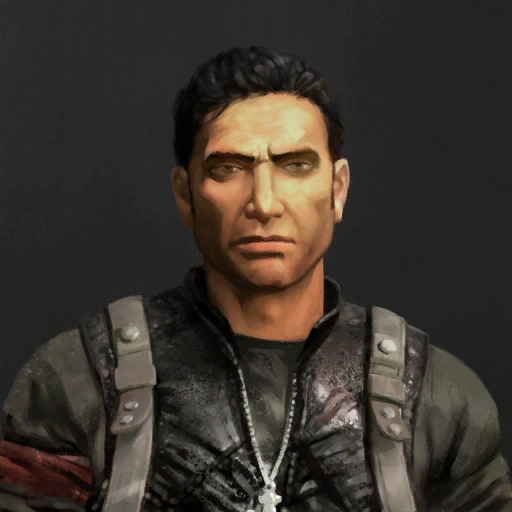
Rico has green eyes and a neat tattoo of a scorpion on his left arm. He was born on 25th January 1968. In Just Cause, Rico wears a standard issue black ops outfit along with with a bulletproof vest and a parachute. He also wears a crucifix, which shows he is a Christian. He talks with a rather strong Spanish accent.
In Just Cause, Rico is portrayed as being a vaguely sarcastic person, but that he is confident in his own abilities and rarely loses his temper. He is rather familiar with the absurdity of his work and occasionally quips in reference to this.
Rico has had quite a few interesting quotes through the games including these: Just cause
"It was getting on my nerves." - Replying to Maria Kane saying "Geez Rico, what the hell did you do to that island?" in the ending cut scene of I've Got the Power.
Just cause 2
Sometimes when causing rampant damage to a military base while in a helicopter (one with rockets and guns going at once) he will sing part of Ride of the Valkyries.
Rico is one of my more favorite characters as he isn't standard copy paste emotionless soldier number 753 and actually has some unique character.
Mechanics
The Just Cause series uses the Avalanche Engine, which Avalanche Studios uses for all of it's games.
Game mechanics include: things that can blow up multiple ways, a grapple for maneuvering and/or manipulating your environment, vehicles that get more battered the more they are tossed around and a fun rag-doll system for the bodies.
A good use of the physics engine is using cars as wrecking balls, grappling enemies to propane tanks to make fire works and for flinging your car off of a mountain to see how many flips and rolls you can do before you explode.
A bad use of the physics engine is accidentally flying into something explosive, grappling your car off a bridge or grappling onto an active propane tank and not remembering to jump off.
Soundtrack
The first Just Cause's soundtrack seems to be more acoustic guitar based, while Just Cause 2 uses a much wider selection of instruments and also has a wider range of variety with music that's more, energetic, dramatic, serious and other moods..
In Just cause 2 I like the 4 guitar cords that play when you are traveling long distances with nothing to blow up as it helps break the boredom a little.
Studio
The Just Cause series is made by Avalanche Studios, a company based in Stockholm, Sweden. Founded in March 2003 by Christofer Sundberg and Linus Blomberg. Avalanche Studios focuses on developing open world games utilizing their Avalanche Engine. (Info source: https://en.wikipedia.org/wiki/Avalanche_Studios) Summary
This is an amazing game series that has inspired many other open world games to want to be just like it. There hasn't been an open world destruction game this good since Red Faction Guerrilla. Granted it was launched only one year before Just Cause 2 and was launched after the first Just Cause but my point still stands, that game was awesome and Just Cause is it's equal.
Let's just hope they don't ruin it like Red Faction was ruined. (Red Faction Armageddon was bad for it's much lower amount of destructibility and lack of free roam, I don't care if there was a weapon that was literally a unicorn farting rainbows.)
Primary research is the act of performing research yourself. For example, playing and reviewing a game, handing out questionnaires/surveys, asking people their opinions on events, doing experiments and so on.
Primary research can be one of the most accurate of the research types when done correctly. It can be accurate because you did the research yourself and so you know that the facts have not been fabricated, but it can also be made in-accurate because the people you ask/survey could be lying or you could have possibly done the research wrong.
Primary research is very useful, to an extent. As you are doing the research yourself, you should have a good understanding of what the results mean, since you created (and in the case of surveys, collected) them. But because of the fact that you are the one doing the research yourself, you are limited by your researching skills and general knowledge in that particular area.
Secondary research is the act of researching research done by someone else. For example, reading game reviews, reading other people's questionnaires/surveys, looking at posts/videos on the internet, reading books and so on.
Primary research can be unreliable depending on your sources. Some sources are truthful and know about what they are actually doing., showing the un-altered results of their surveys, accurate information, etc. But some of the sources are a lot less reliable and sometimes rather incompetent/ignorant, with falsified questionnaires, biased reviews and straight up lies for information (I'm looking at you Fox News).
Secondary research is much more easily done that primary as the research is already there, you really just have to find the appropriate research, while avoiding the more unreliable sources.
Quantitative research is the type of research that focuses on numbers, ratings and short multiple choice questions.
This is designed for collecting numerical/group-able information like what people would rate a product, which of a few choices would they choose, and other similar methods.
Quantitative Research, while perfect for ratings and other such information, it is impossible to use for detailed opinions and open ended questions due to them being much too broad to group them all together.
Qualitative research is the type of research that focuses on detail, opinions and long open ended questions.
This is meant specifically for collecting information such as what peoples opinions on an event are, their feelings about something, and other more detailed information.
Qualitative research while it is good for more detailed answers like opinions and feelings, it is not quite as good for quantitative information such as ratings and multiple choice questions, as they do not have nearly a sufficient amount of information.